
When Dental Crosses into Medical Coverage
Medical carriers cover dental procedures only when they meet strict medical-necessity standards. These include:
- Trauma & Accidents: Broken jaws, fractured teeth (ICD-10 S02.5XXA), or avulsed teeth from an auto accident. These are not “dental” problems—they’re injuries, and medical insurance treats them as such.
- Infections: Severe swelling, cellulitis, osteomyelitis, or airway risk. A periapical abscess (K04.7) with systemic threat is medical territory.
- Cancer & Pathology: Tumor or cyst removal, reconstruction after oral cancer surgery (CPT 21048 + ICD-10 C06.9).
- Congenital Anomalies: Children born with cleft palate (Q35.9) or craniofacial deformities requiring surgical correction.
- TMJ / Sleep Apnea: Joint surgery (CPT 21060, 21240) or mandibular advancement devices for apnea, which are considered medical durable equipment.
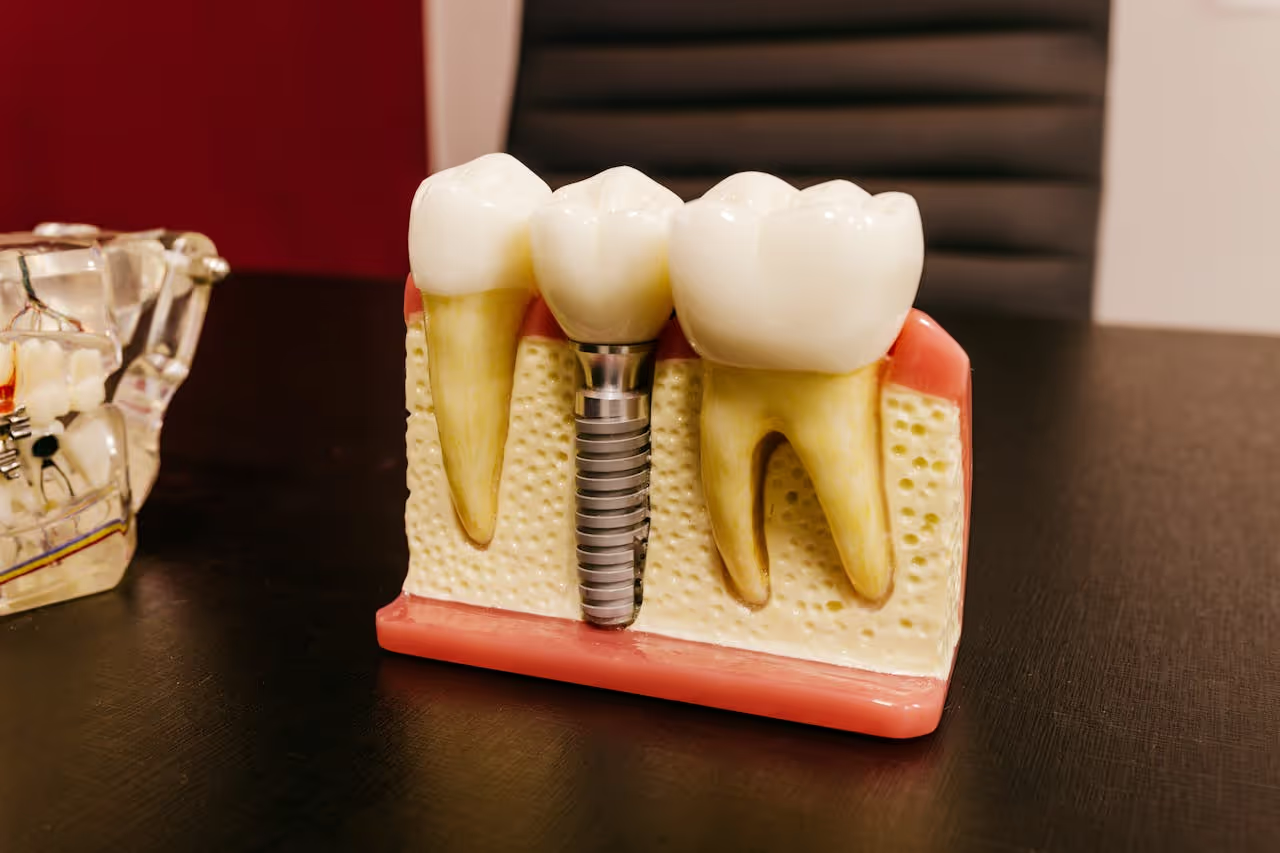
Routine fillings, crowns, and cosmetic implants remain dental-only.
How to Bill It Right
- Forms: CMS-1500 with CPT/ICD-10 (never CDT). Some carriers (like BCBS) explicitly instruct using CMS-1500 for trauma-related care.
- Core CPTs: 21248/21249 for jaw reconstruction with implants; 41800 for I&D of abscess; 41899 when no CPT fits.
- Modifiers: 25, 59, 51, 26/TC—used exactly as CMS/NCCI rules dictate.
- Narratives: Go beyond “tooth broke.” Spell out systemic necessity: “Patient presented with acute swelling… airway compromise… imaging confirmed abscess…” Always attach X-rays, photos, pathology, or ER notes.
Preauthorization Truth
- Commercial plans (Aetna, UHC, Cigna, Anthem): Precert is routine for implants, TMJ, congenital anomalies, oncology, and apnea. Emergencies may be exempt.
- Medicare: Covers only when procedures are “inextricably linked” to medical care—jaw fracture stabilization, pre-radiation extractions, or cancer-related reconstructions. Documentation is king.
- Tricare: Covers “adjunctive dental” when tied to medical need, but insists on preauth unless emergent.
- Medicaid: State-dependent, but most require prior review for trauma/congenital cases unless emergent.