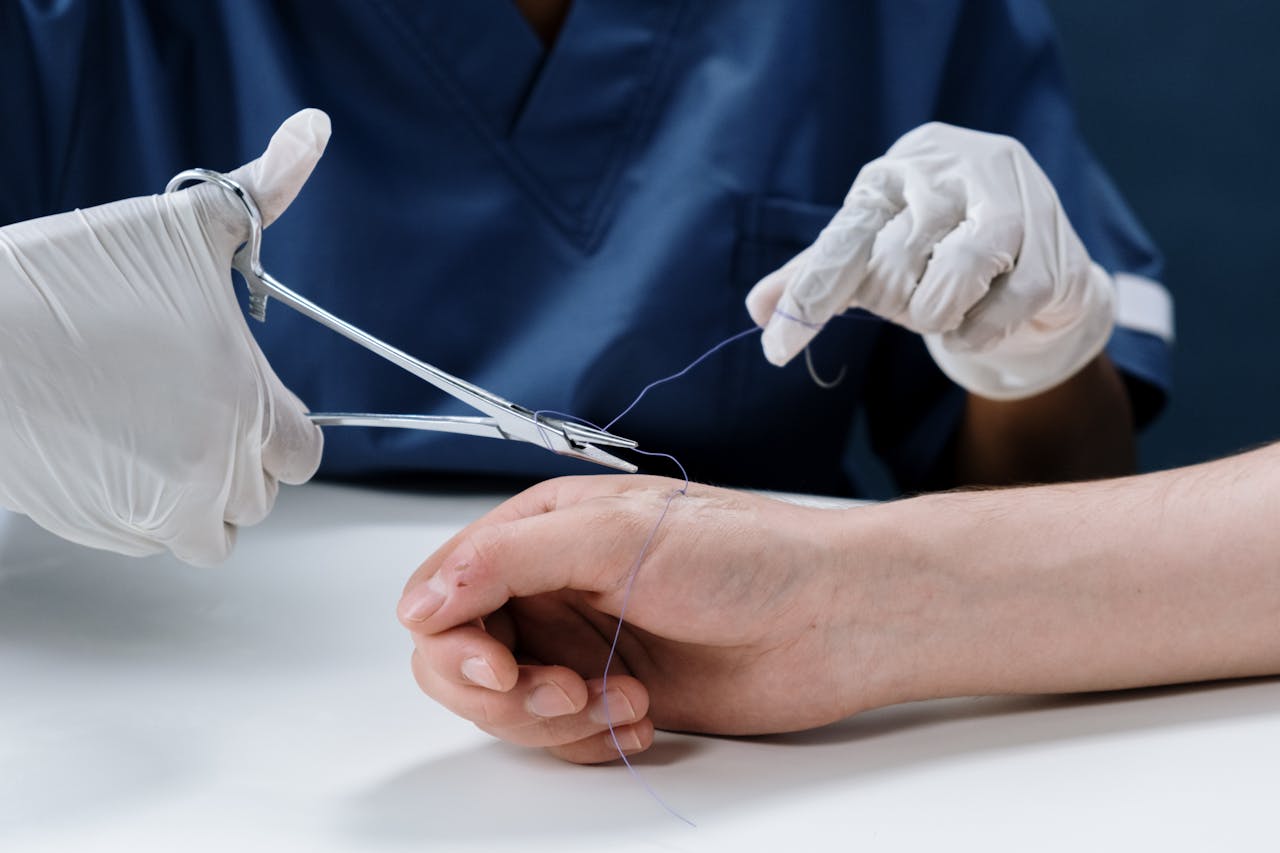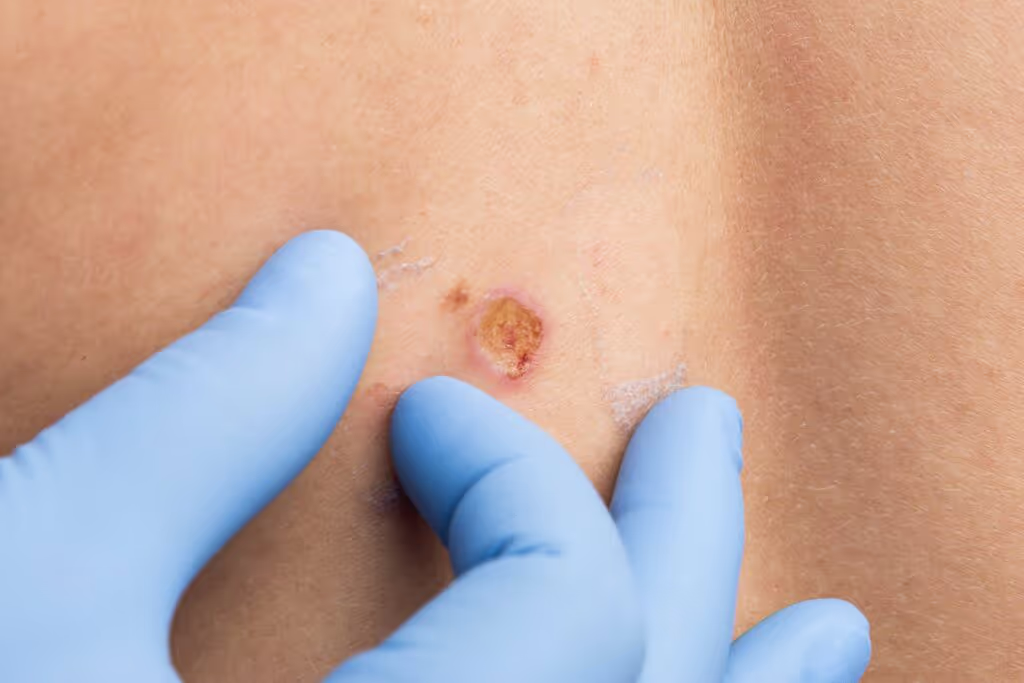


Are you billing all closures as simple repairs? You could be leaving significant revenue on the table. Payers define repairs in three distinct categories: Simple, Intermediate, and Complex. Billing correctly requires documenting why a closure was more than just a simple one-layer suture.
The 3 Tiers of Skin Repair
Simple Repair (CPT 12001-12021):
- One-layer closure of epidermis, dermis, or subcutaneous tissues.
- This is often bundled into other procedures (like excisions or biopsies) and not separately billable.
Intermediate Repair (CPT 12031-12057):
- A layered closure (e.g., repairing dermis/subcutaneous tissue) OR...
- A single-layer closure that is heavily contaminated and requires extensive cleaning.
Complex Repair (CPT 13100-13160):
- Goes beyond layered closure. Requires scar revision, undermining, stents, or retention sutures. This is for the most complicated wounds.
How to Bill Correctly
- Location & Length: Coding is based on location (e.g., scalp, trunk, arms) and the total length of the repair(s) in centimeters.
- Rule of Sums: You must add the lengths of repairs of the same type (e.g., all intermediate) and in the same anatomical group (e.g., trunk).
- Example: A 2cm intermediate repair on the arm and a 3cm intermediate repair on the chest. The arm (12031) and chest (12032) are in different groups, so you bill them on separate lines.
- Example 2: A 2cm and 3cm intermediate repair both on the arm. You sum them to 5cm and bill 12032 (2.6 cm to 7.5 cm).
The Documentation is Key
"Simple closures are almost always bundled. The real revenue is in accurately documenting why a repair was intermediate. Your op note must explicitly state 'performed a layered closure' or 'extensive cleaning of contaminated wound' to justify an intermediate (1203x) code."















_0.659722055465341110000.png?generation=1767673122094668&alt=media)