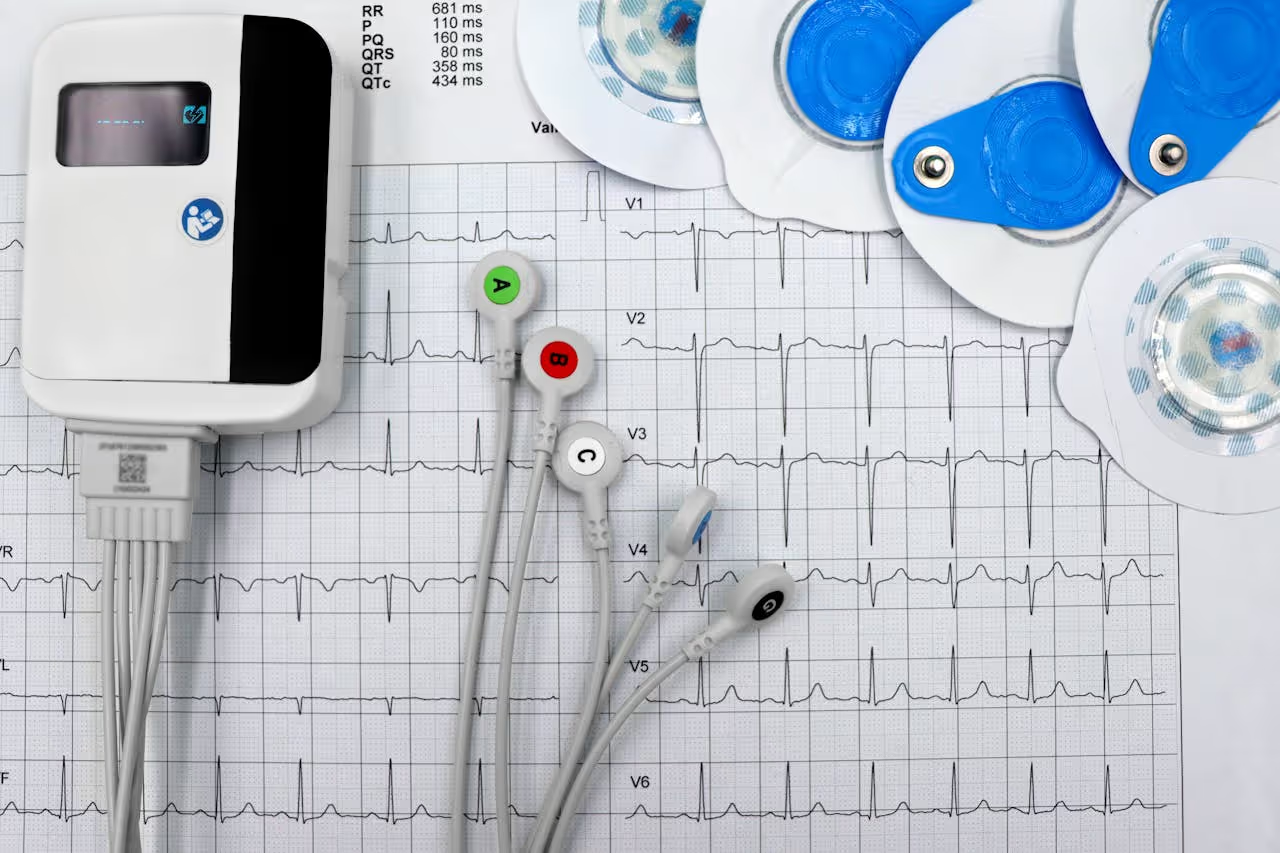


Electrodiagnostic (EDX) studies, including Nerve Conduction Studies (NCS) and Electromyography (EMG), are cornerstone procedures in Physical Medicine & Rehab. They provide invaluable diagnostic data for neuromuscular disorders but are also a frequent target for payer scrutiny, leading to denials and revenue loss. Successfully navigating the complex billing nuances requires more than just knowing the codes; it demands a precise understanding of CPT definitions, modifier application, and the critical link to ICD-10 codes that establish medical necessity. This guide provides PM&R providers with the actionable intelligence needed to overcome these challenges and secure appropriate reimbursement.
Navigating Core CPT Codes for EDX Studies
Accurate reimbursement for EDX testing begins with selecting the correct CPT codes. The primary codes are divided into Nerve Conduction Studies and Needle Electromyography, and understanding their distinct billing units is non-negotiable.
For Nerve Conduction Studies (CPT 95907-95913), reimbursement is calculated on a per-nerve basis. This is a critical distinction, as misinterpreting this can lead to significant under-billing. For example, a median motor nerve study with latency, amplitude, and velocity is billed as one unit of `95908`. For Needle Electromyography, the codes are determined by the number of extremities tested (e.g., `95860` for one extremity, `95861` for two). Crucially, the add-on code `+95886` (Needle EMG, each muscle) is used when performed with NCS and is billed per muscle tested, but it must always be appended to a primary NCS code.
Modifiers & ICD-10: Establishing Medical Necessity
CPT codes alone are insufficient; they must be supported by diagnosis codes that prove the study was medically necessary and by modifiers that clarify the circumstances of the service. Payers require a direct, logical link between the patient's diagnosis and the specific nerves or muscles tested. A vague diagnosis like `M54.9` (Dorsalgia, unspecified) will likely fail to support a detailed brachial plexus study.
Instead, use highly specific codes like `G56.01` (Carpal tunnel syndrome, right upper limb) to justify testing the median nerve. When performing distinct procedures on the same day, Modifier 59 is essential to bypass automated bundling edits and signal that two services were separate and necessary. For example, if performing a diagnostic EMG on the left arm and a therapeutic injection in the right shoulder, Modifier 59 on the EMG code prevents the payer from bundling it into the injection service. Similarly, Modifiers 26 (Professional Component) and TC (Technical Component) are used when the interpretation and the performance of the test are done by different entities.
Payer Nuances & Common Denial Traps
Beyond universal coding rules, PM&R practices must contend with payer-specific Local Coverage Determinations (LCDs) and policies that create frequent denial traps. A primary example is unit limitations. Many Medicare Administrative Contractors (MACs) and commercial payers impose caps on the number of NCS (`95907-95913`) and EMG (`+95886`) units billable per session. For instance, Noridian's LCD L34161 generally considers more than 4 motor nerve conduction studies or 8 studies total per limb to be not medically necessary without extensive documentation.
Another common trap is the denial of claims for being a "fishing expedition." Documentation must clearly outline the specific clinical question the EDX study aims to answer (e.g., "Evaluate for C6 radiculopathy vs. peripheral median neuropathy"). Claims lacking this focus are often denied. Finally, ensure the performing provider is properly credentialed with each payer specifically for EDX procedures. A correctly coded claim can still be denied if the provider isn't recognized as qualified to perform the service.
Ensuring Compliance and Profitability in EDX Billing
Maximizing reimbursement for electrodiagnostic studies is an exercise in precision. Success hinges on a synergistic approach that combines correct per-nerve CPT coding, the strategic application of modifiers like -59, and the use of high-specificity ICD-10 codes that unequivocally prove medical necessity. By proactively reviewing and adhering to payer-specific unit limitations and ensuring provider credentialing is up-to-date, PM&R practices can transform this heavily scrutinized service line into a compliant and profitable component of their operations. A proactive and expert-led RCM strategy is the key to navigating these complexities effectively.
EDX Coding Essentials
- Bill per Nerve: Use CPT codes 95907-95913 for each nerve tested in an NCS.
- Link Diagnosis: Justify each test with a specific ICD-10 code (e.g., G56.01 for Carpal Tunnel).
- Use Modifiers: Apply Modifier 59 to unbundle distinct procedures performed on the same day.
- Check Payer Rules: Be aware of payer-specific unit limitations for NCS and EMG codes to prevent automatic denials.
- Credentialing is Key: Ensure providers are credentialed to perform and bill for EDX studies with each payer.
Why Choose Us
At Bonfire Revenue, we are more than just billers—we are specialized RCM consultants for PM&R. Our experts understand the intricate payer policies and coding nuances of electrodiagnostic studies. We proactively manage your credentialing and billing to prevent denials, ensuring you are paid correctly and promptly for your complex services.