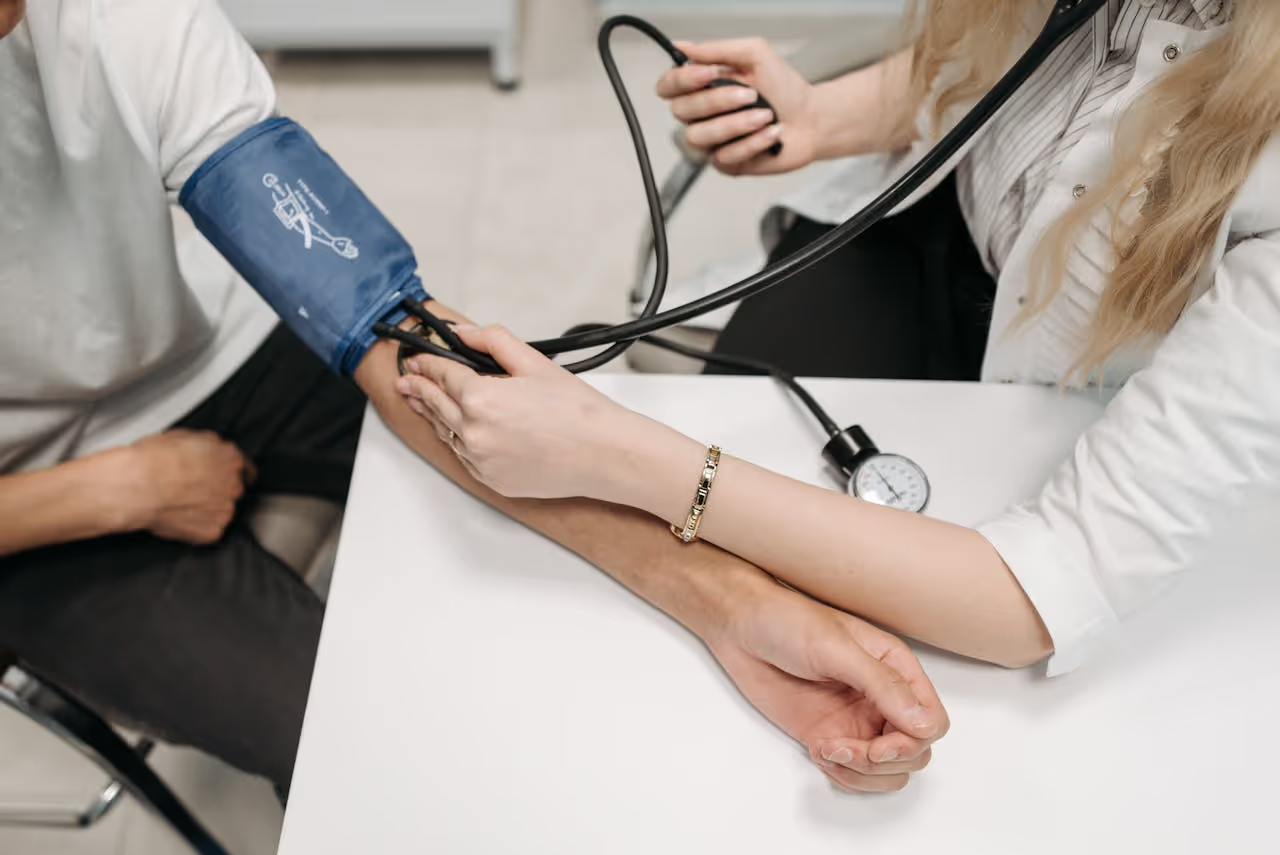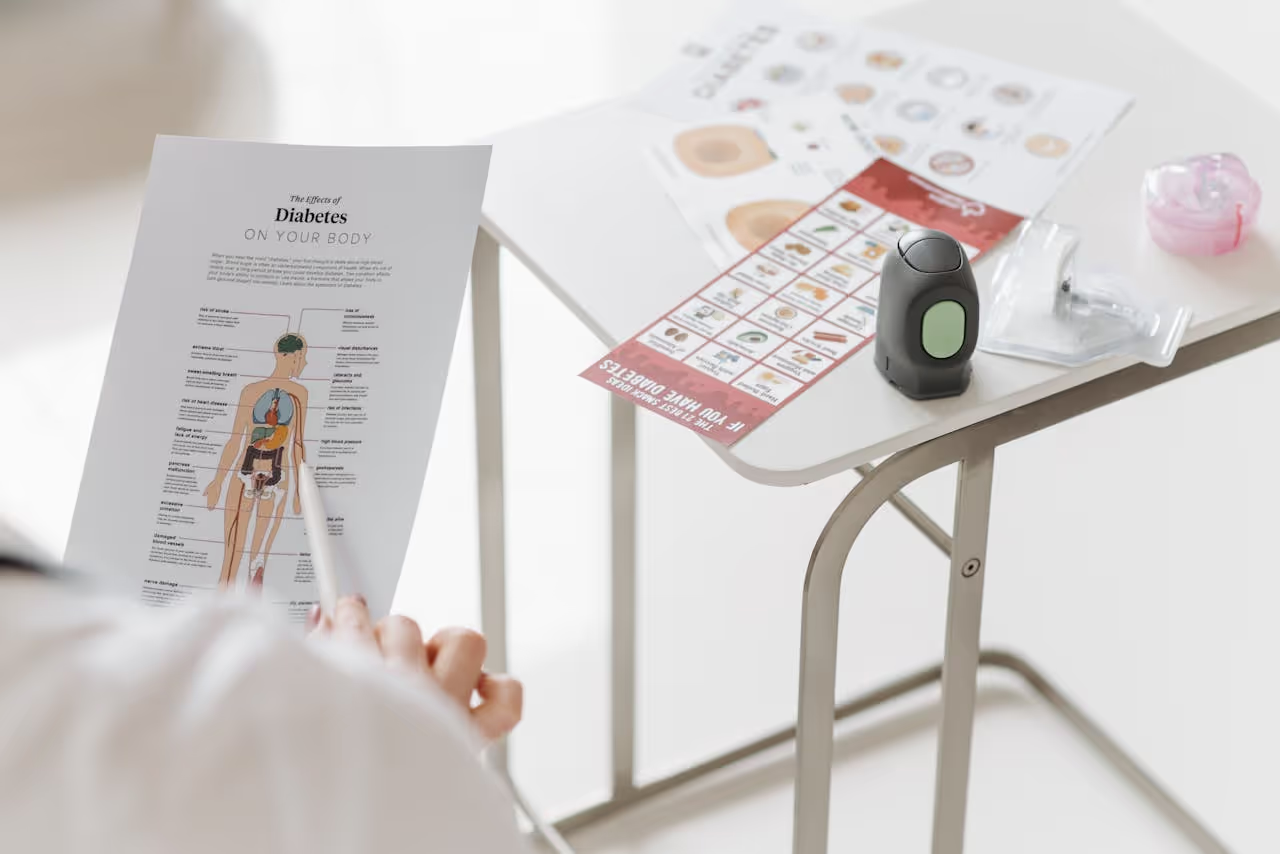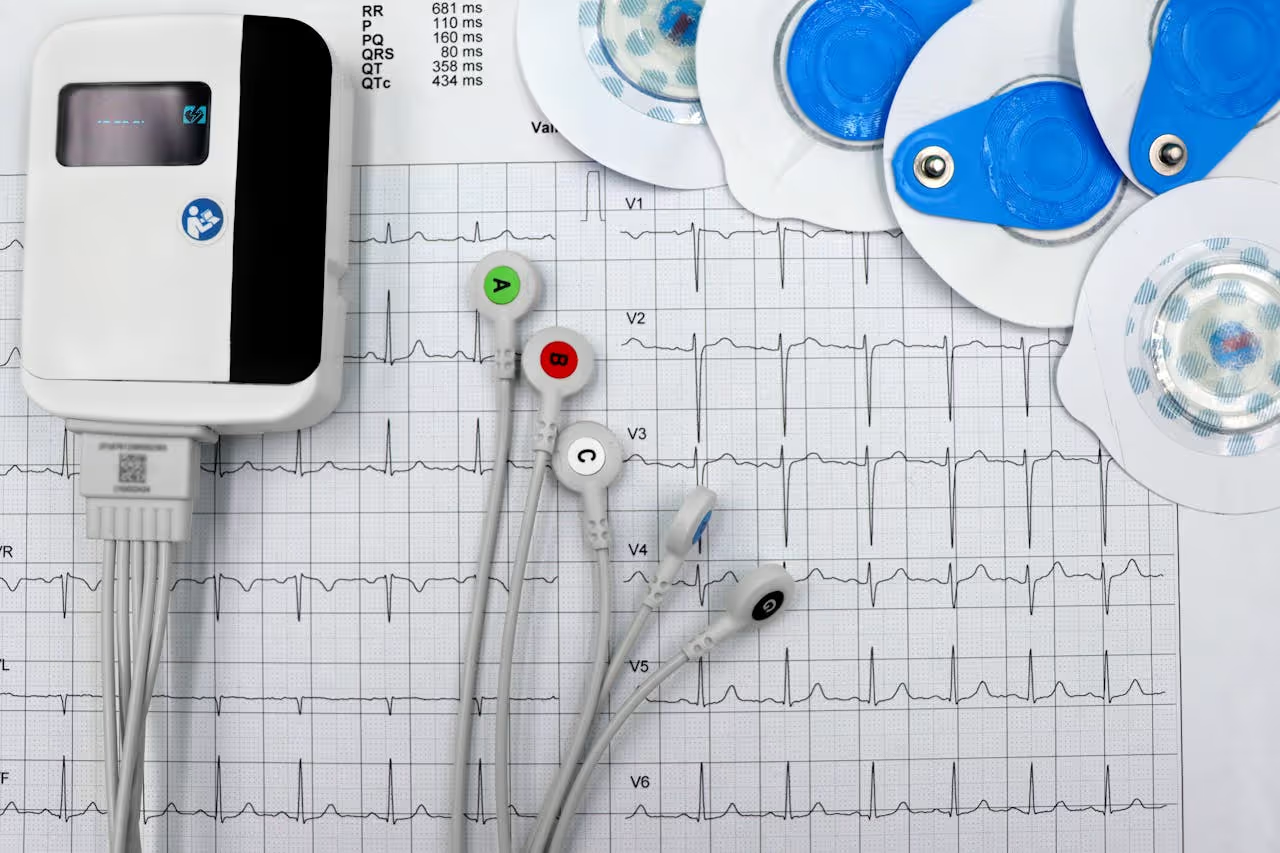


For Primary Care Providers (PCPs), the annual wellness visit is a cornerstone of patient care. However, it frequently presents a significant billing challenge. A patient scheduled for a routine physical often brings up a new or exacerbated health problem, transforming a straightforward preventive service into a complex, dual-component encounter. This common scenario can lead to claim denials, underpayments, and revenue loss if not coded with precision. Understanding the critical distinction between a preventive service and a problem-oriented Evaluation and Management (E/M) service—and how to bill for both on the same day—is essential for the financial health of your practice.
Defining the Preventive Medicine Service
A preventive medicine service, commonly known as an annual physical, is defined by CPT codes 99381-99387 (for new patients) and 99391-99397 (for established patients). The core components of these visits include an age and gender-appropriate history, examination, counseling, anticipatory guidance, and risk factor reduction interventions. These services are not intended to address specific patient complaints or problems.
The diagnosis coding for a purely preventive visit should reflect its nature. Typically, you will use a code from the ICD-10-CM Z-code series, such as Z00.00 (Encounter for general adult medical examination without abnormal findings) or Z00.129 (Encounter for routine child health examination without abnormal findings). Payer policies dictate that these CPT codes must be linked to a corresponding preventive diagnosis code to be covered under the patient's wellness benefit, which often has no cost-sharing.
When a Wellness Visit Includes Problem Management
The billing complexity arises when a provider performs a significant, separately identifiable E/M service for a patient's complaint during the same encounter as a preventive visit. For example, a patient might mention new-onset chest pain or ask for management of their uncontrolled diabetes during their physical. Addressing this problem requires additional work in terms of history, examination, and medical decision-making that goes beyond the scope of the preventive service.
This is where Modifier 25 becomes critical. This modifier is appended to the problem-oriented E/M code (e.g., 99213, 99214) to indicate that the service was distinct from the preventive visit. Failure to use Modifier 25 will almost certainly result in a denial, as payers will bundle the E/M service into the preventive visit fee. Proper use signals to the payer that two separate services were legitimately performed and documented during a single encounter.
Coding in Practice: A Real-World PCP Scenario
Consider a 62-year-old established male patient presenting for his annual physical. During the visit, he also complains of worsening knee pain that limits his mobility. The provider performs the comprehensive preventive exam and counseling, but also conducts a focused history of the knee pain, performs a targeted musculoskeletal exam of the knee, reviews prior imaging, and prescribes a new anti-inflammatory medication and a referral to orthopedics.
The claim should be coded as follows:
- Preventive Service: CPT 99396 (Periodic comprehensive preventive medicine... age 40-64) linked to ICD-10 Z00.00.
- Problem-Oriented Service: CPT 99213-25 (Office outpatient visit, established patient, with Modifier 25) linked to ICD-10 M25.561 (Pain in right knee).
Crucially, the provider's documentation must clearly delineate the two services. The note should have separate sections or distinct paragraphs for the preventive components and the HPI, exam, assessment, and plan related to the knee pain to withstand payer scrutiny.
Maximizing Reimbursement Through Coding Precision
Navigating the nuances of billing for dual-component visits is non-negotiable for a financially secure primary care practice. Accurately distinguishing between preventive services and problem-oriented E/M services—and documenting them separately—is the foundation. Correctly applying Modifier 25 is not an attempt to "double-dip," but rather the compliant mechanism for being reimbursed for all the work performed. By mastering these coding principles and staying vigilant about evolving payer policies, PCPs can ensure revenue integrity and continue providing comprehensive, high-quality patient care without sacrificing deserved compensation.
Wellness vs. Problem Billing
- Preventive Visits (99381-99397): Used for routine, age-appropriate physicals and must be linked to a Z-code diagnosis.
- Problem-Oriented E/M (99202-99215): Addresses new or existing health problems requiring separate medical decision-making.
- Modifier 25: Append to the problem-oriented E/M code when performed on the same day as a preventive service.
- Documentation is Key: Your note must clearly separate the history, exam, and plan for the preventive service from the problem-oriented service.
Why Choose Us
At Bonfire Revenue, our RCM experts specialize in the complexities of Primary Care billing. We eliminate the guesswork from challenging coding scenarios like Modifier 25 usage, ensuring your claims are clean, compliant, and paid correctly the first time. Stop letting payer edits dictate your revenue.