

Oral and Maxillofacial Surgeons operate at the critical intersection of dentistry and medicine, a position that creates unique and often frustrating revenue cycle challenges. While restorative procedures like dental implants and bone grafting are routine for an OMS practice, billing for them is not. Payers frequently scrutinize these claims, demanding rigorous proof of medical necessity to justify coverage under a medical benefit plan. Navigating this complex landscape requires more than just clinical skill; it demands a sophisticated understanding of CPT and ICD-10 coding to ensure accurate reimbursement and prevent costly denials.
The Deciding Factor: Medical vs. Dental Necessity
The primary hurdle in restorative OMS billing is determining whether to submit a claim to medical or dental insurance. The deciding factor is always medical necessity. A procedure is deemed medically necessary when it is required to treat a non-dental condition, such as atrophy from trauma, congenital defects, or complications from systemic disease. Simply replacing a missing tooth for masticatory function is typically a dental benefit.
However, when placing a dental implant to restore function after a traumatic avulsion or performing a ridge augmentation for a patient with severe alveolar atrophy (classified under ICD-10-CM K08.2x), the rationale shifts from dental to medical. Meticulous documentation in the patient's record is non-negotiable; it must clearly link the restorative procedure to the underlying medical diagnosis, forming the foundation for a successful medical claim.
Core CPT Codes for OMS Restorative Procedures
While CDT codes govern dental billing, medical claims require specific CPT codes. For OMS restorative services, proficiency with the musculoskeletal system and integumentary system sections of the CPT manual is essential. Key codes include:
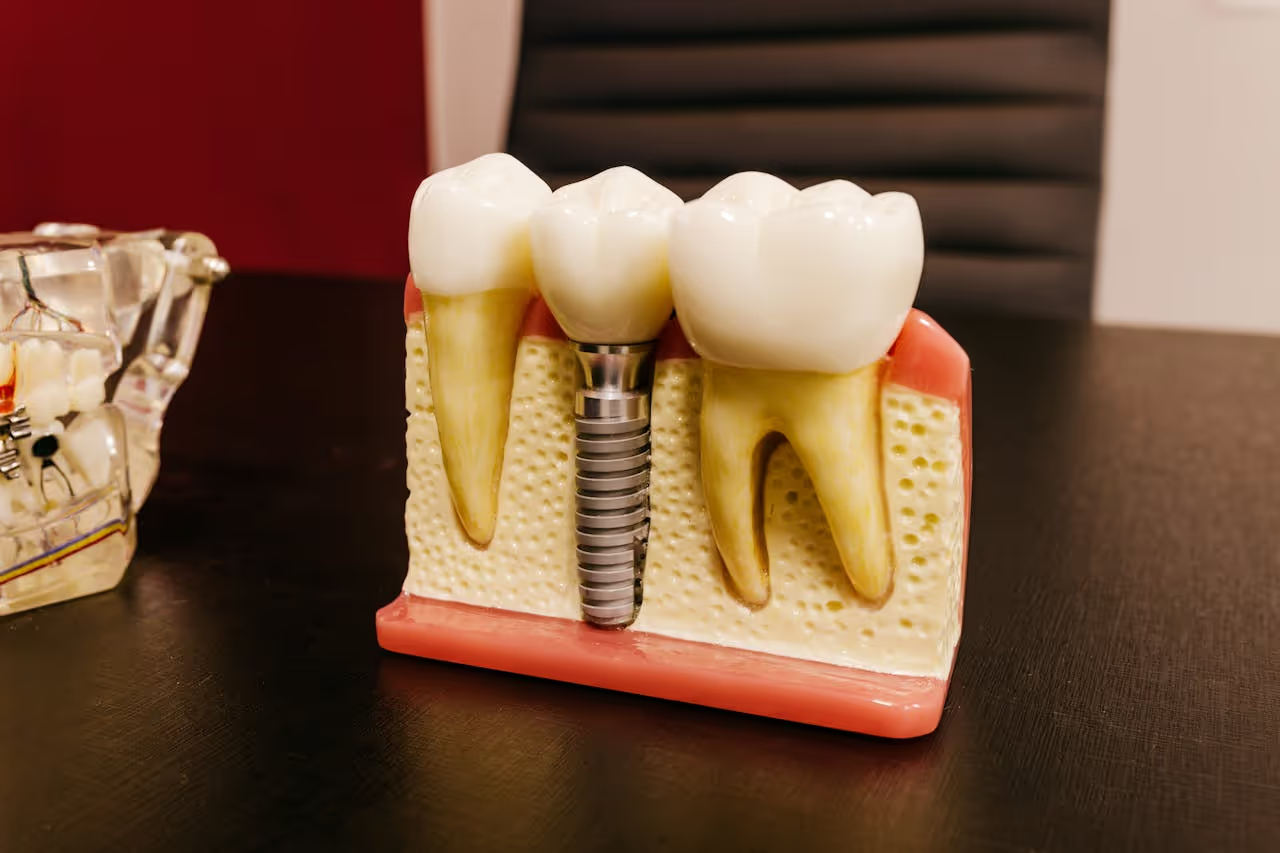
- CPT 21248: Reconstruction of mandible or maxilla, endosteal implant (e.g., blade, cylinder); partial. This code is used for the surgical placement of the implant body.
- CPT 21249: Reconstruction of mandible or maxilla, endosteal implant (e.g., blade, cylinder); complete. Used for a full arch reconstruction.
- CPT 21210: Graft, bone; nasal, maxillary or malar areas (includes obtaining graft).
- CPT 21215: Graft, bone; mandible (includes obtaining graft).
It is crucial to note that these codes cover only the surgical placement. The fabrication and placement of the final prosthesis (crown, bridge) are almost always considered a dental procedure and billed separately using CDT codes.
Case Study: ICD-10 & Modifier Strategy in Action
Let's analyze a common scenario: A patient requires a bone graft on the maxilla followed by the placement of two endosteal implants in the same surgical session due to severe localized atrophy following a traumatic injury years prior. Inaccurate coding here will lead to an immediate denial.
The correct billing strategy involves precise code linkage and modifier application:
- Procedure 1: CPT 21210 (Bone graft, maxilla)
- Procedure 2: CPT 21248 (Partial reconstruction, endosteal implant)
- Modifier: Append Modifier 51 (Multiple Procedures) to the second procedure (CPT 21248) to inform the payer that multiple, distinct procedures were performed during the same session. This prevents the second procedure from being denied as incidental to the first.
- Diagnosis Linkage: The primary diagnosis must establish medical necessity. For example, ICD-10-CM S02.400A (Maxillary fracture, initial encounter) as the historical cause, linked to K08.22 (Moderate atrophy of the maxilla) as the current condition requiring treatment. This narrative tells the payer *why* the procedures were medically necessary.
Optimizing Reimbursement Through Precision
Successfully billing for restorative dentistry in an OMS setting is a matter of precision. It requires a deep understanding of payer policies and the ability to construct a compelling narrative through the strategic use of CPT codes, ICD-10-CM diagnoses, and appropriate modifiers. By meticulously documenting medical necessity and ensuring every claim tells a clear and accurate story, OMS practices can overcome common payer obstacles, reduce denials, and secure the reimbursement they have rightfully earned for their complex and vital services.
Restorative Billing Essentials
- Medical Necessity is Key: Claims must be justified by a medical diagnosis (e.g., trauma, atrophy), not just tooth replacement.
- Use Correct CPT Codes: Utilize codes like CPT 21248/21249 for implants and 21210/21215 for bone grafts on medical claims.
- Link to Specific ICD-10: Pair procedures with precise diagnosis codes like K08.2x (atrophy) to prove necessity.
- Apply Modifiers: Use Modifier 51 for multiple procedures in one session to prevent bundling denials.
Why Choose Us
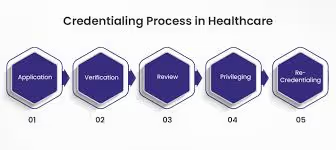
Your expertise is in surgery, not navigating the labyrinth of payer-specific coding rules. Bonfire Revenue's dedicated OMS billing experts manage the entire revenue cycle, from credentialing to complex claim submission and denial management. We ensure your restorative procedures are coded with precision, maximizing reimbursement and allowing you to focus on patient care.