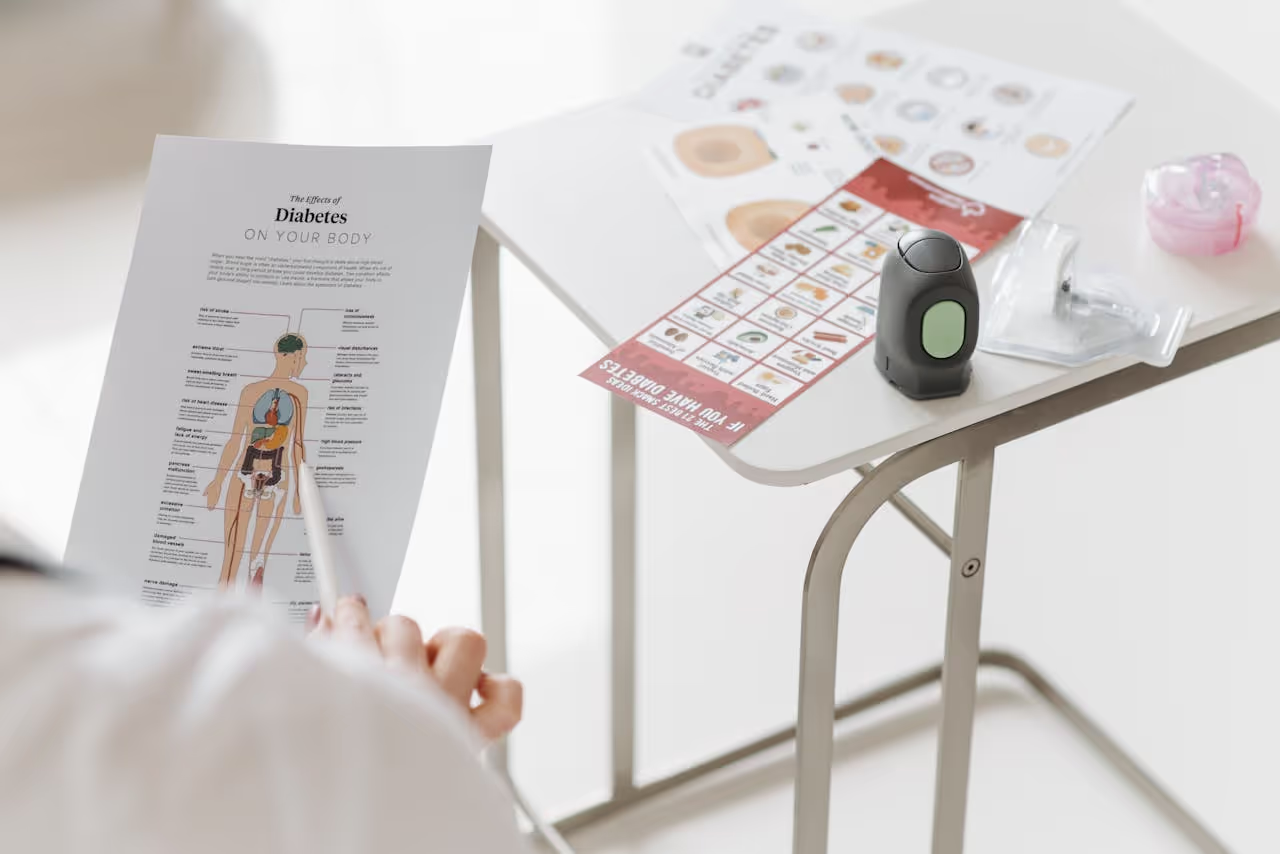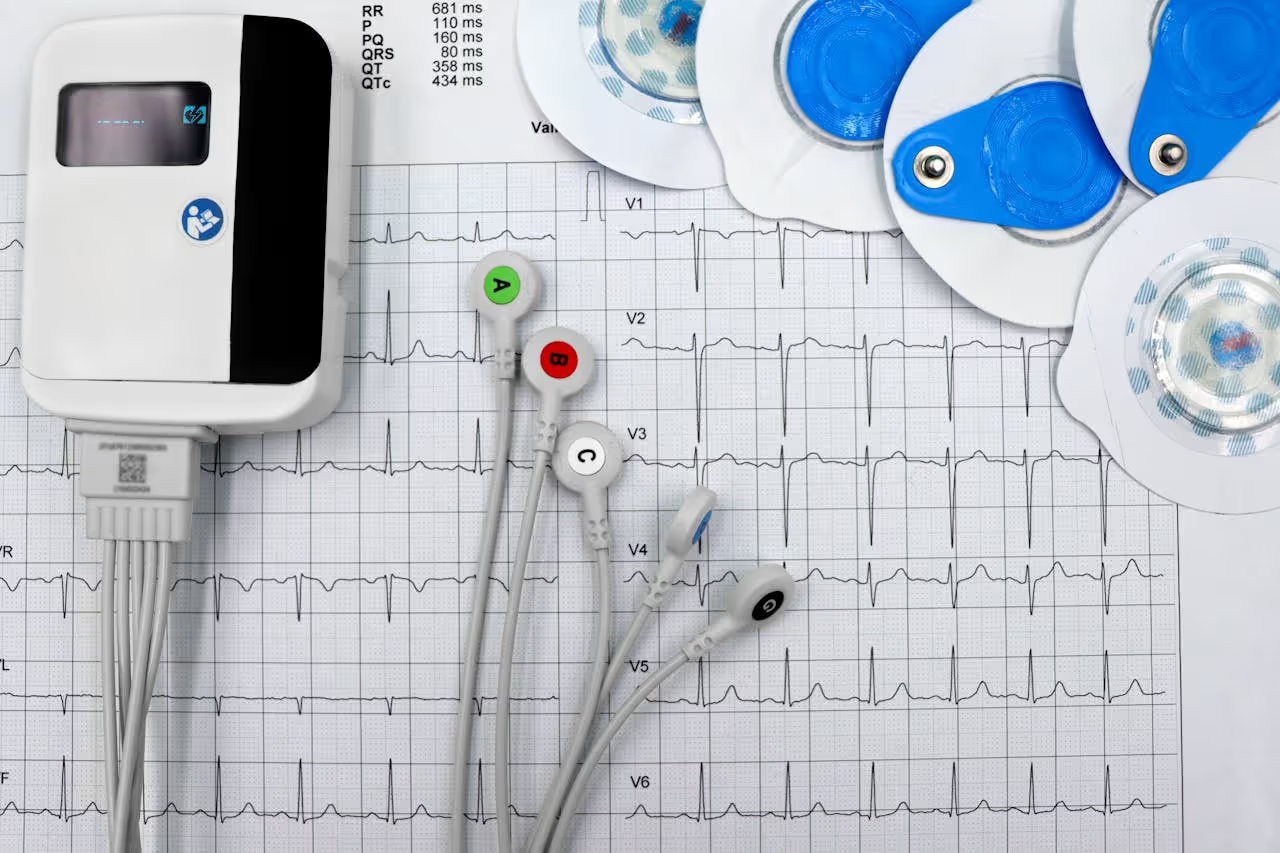


Internal Medicine providers are at the forefront of preventive care, managing chronic conditions like diabetes, hypertension, and hyperlipidemia through routine screenings. However, the financial health of a practice often hinges on navigating a complex billing scenario: when a preventive visit uncovers or addresses a separate, significant medical issue. This intersection is a frequent source of claim denials and revenue loss. Mastering the nuances of coding for both a preventive service and a problem-oriented Evaluation and Management (E/M) service during the same encounter is no longer just good practice—it's essential for survival in a landscape of increasing payer scrutiny.
Navigating Preventive and Problem-Oriented E/M Services
The core challenge lies in differentiating between a preventive visit (CPT codes 99381-99397) and a problem-oriented E/M visit (99202-99215). A preventive service is comprehensive, age- and gender-appropriate, and not disease-specific. Conversely, a problem-oriented visit addresses a specific complaint or established condition, focusing on medical decision-making.
When both services occur on the same day, Modifier 25 becomes the critical tool. This modifier signifies a "Significant, Separately Identifiable Evaluation and Management Service by the Same Physician... on the Same Day of the Procedure or Other Service." Appending Modifier 25 to the problem-oriented E/M code (e.g., 99213-25) tells the payer that the work performed was distinct from the routine components of the preventive exam. Crucially, your documentation must explicitly support this distinction, detailing the history, examination, and medical decision-making for the separate problem.
Coding Specifics: Diabetes, Hypertension, and Hyperlipidemia
Accurate coding requires precise CPT and ICD-10 linkage. For preventive screenings, "Z" codes are used to report the reason for the encounter when a problem has not yet been diagnosed.
- Diabetes Screening: A preventive visit (e.g., 99395 for an established patient aged 18-39) should be linked to ICD-10 code Z13.1 (Encounter for screening for diabetes mellitus). If during this visit, you actively manage the patient's diagnosed Type 2 diabetes (E11.-), you would bill a separate E/M code with Modifier 25, linking that CPT to the E11.- diagnosis.
- Hypertension Management: A patient presents for an annual physical (99396). During the exam, you note their blood pressure is high and spend significant time adjusting their medication for established hypertension (I10). This work justifies billing 99396 (linked to Z00.00) and an appropriate E/M code like 99213-25 (linked to I10). The documentation for the 99213 must reflect the work of managing the chronic condition.
- Cholesterol Screening: A lipid panel is a standard part of a preventive visit, linked to ICD-10 Z13.220 (Encounter for screening for lipoid disorders). If the results are reviewed, found to be critically high, and you initiate statin therapy and extensive counseling during that same visit, this additional work supports a problem-oriented E/M with Modifier 25, linked to a definitive diagnosis like E78.2 (Mixed hyperlipidemia).
Case Study: A Modifier 25 Scenario and Payer Audits
Consider a 58-year-old established male patient presenting for his annual wellness exam. The visit's primary purpose is preventive. During the comprehensive review of systems, he complains of recent-onset exertional chest pain. This prompts a separate, detailed history of the new problem, a focused cardiovascular exam beyond the baseline, and medical decision-making that includes ordering a stress test and prescribing sublingual nitroglycerin.
The correct billing is two-fold:
1. CPT 99396 linked to ICD-10 Z00.00 (Encounter for general adult medical examination without abnormal findings).
2. CPT 99214-25 linked to ICD-10 R07.9 (Chest pain, unspecified) or a more specific diagnosis if determined.
Your documentation must have a distinct note or section for the chest pain workup. Payers, particularly in 2025-2026, are intensifying audits on Modifier 25 usage. Failure to provide this clear, separate documentation is the fastest path to a denial and potential recoupment actions.
Recap: Achieving Coding Accuracy and Financial Health
Successfully billing for preventive screenings alongside problem management in Internal Medicine is a matter of precision. It requires a deep understanding of Modifier 25, diligent documentation practices that clearly delineate separate services, and accurate ICD-10 to CPT code linkage to establish medical necessity. By adopting a proactive approach to coding and documentation, your practice can defend against payer scrutiny, eliminate preventable denials, and secure the revenue you have rightfully earned. This diligence ensures financial stability, allowing you to focus on delivering high-quality patient care.