

For home health and hospice agencies, the financial stability of your operations hinges on the accurate translation of clinical care into billable claims. Nursing assessments are the cornerstone of this process, but complex payment models like the Patient-Driven Groupings Model (PDGM) and hospice per diem rates create significant billing nuances. Simply documenting a visit is insufficient; reimbursement is now directly tied to the granular details of patient condition, comorbidities, and functional status. This article dissects the critical coding practices that ensure your agency captures the full, appropriate reimbursement for the essential nursing care you provide.
Beyond Visit Codes: Coding Under PDGM
Under the PDGM, home health agencies (HHAs) are not reimbursed on a simple fee-for-service basis for each nursing visit. Instead, payment is bundled into 30-day periods of care, with the reimbursement rate determined by a Health Insurance Prospective Payment System (HIPPS) code. This HIPPS code is generated from data collected during the Outcome and Assessment Information Set (OASIS) assessment.
Therefore, the focus of coding accuracy shifts from individual CPT codes for visits to the comprehensive and precise capture of clinical information within the OASIS tool. The selection of the primary diagnosis, reporting of relevant secondary diagnoses, and assessment of functional impairments all directly influence the five PDGM case-mix variables: admission source, timing, clinical grouping, functional impairment level, and comorbidity adjustment. Inaccurate or incomplete OASIS data leads directly to an incorrect HIPPS code and, consequently, underpayment.
The Critical Role of ICD-10 in Reimbursement
ICD-10-CM coding is the engine that drives reimbursement in both home health and hospice. For HHAs, the primary diagnosis determines the clinical grouping under PDGM, a major component of the payment calculation. Vague or symptom-based codes are often down-coded or denied. For instance, using R05 (Cough) as a primary diagnosis is unacceptable when the underlying cause, such as J44.1 (Chronic obstructive pulmonary disease with acute exacerbation), is known and documented.
In hospice, the principal diagnosis must be the terminal illness, supported by related secondary diagnoses that contribute to the terminal prognosis and justify the plan of care. An accurate list of comorbidities is not just for clinical purposes; it substantiates the patient's eligibility for the hospice benefit and supports the medical necessity of the services rendered, which is crucial during medical reviews.
Real-World Example: Maximizing Comorbidity Adjustments
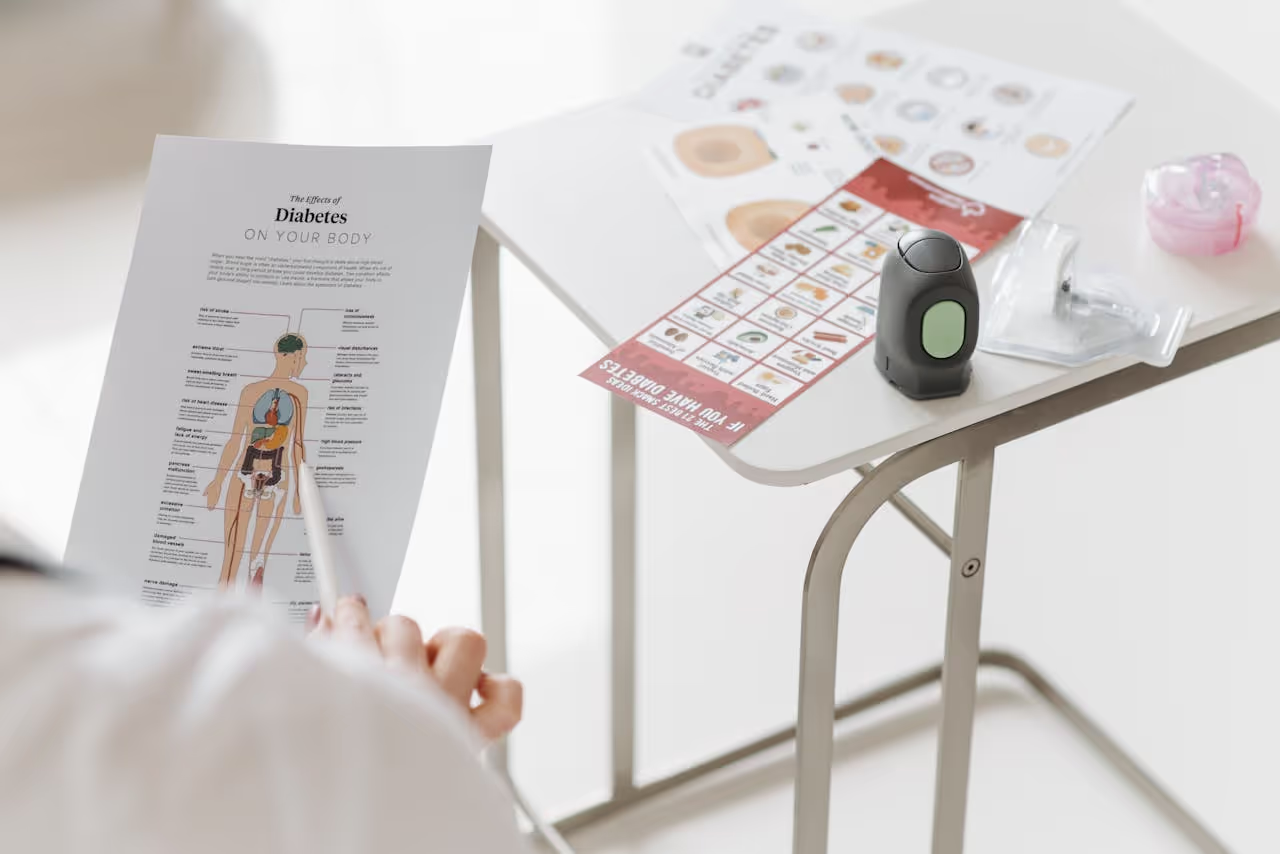
Consider a home health patient admitted for wound care following a surgical procedure. The primary diagnosis might be Z48.812 (Encounter for surgical aftercare following surgery on the skin and subcutaneous tissue). While correct, the reimbursement can be significantly impacted by comorbidities. If the nurse’s assessment documents that the patient also has poorly controlled Type 2 diabetes with neuropathy (E11.40) and this condition requires specific nursing interventions (e.g., blood glucose monitoring, patient education), this secondary diagnosis is critical.
Including E11.40 on the claim and in the OASIS data can trigger a comorbidity adjustment under PDGM, resulting in a higher payment that accurately reflects the increased complexity and cost of care. Failing to code for this documented comorbidity leaves money on the table and misrepresents the patient's acuity. Similarly, for hospice claims, modifiers like GV (Attending physician not employed by hospice) or GW (Service unrelated to terminal condition) must be applied correctly to avoid claim rejection for services provided outside the hospice plan of care.
Ensuring Financial Health Through Coding Precision
Mastering home health and hospice billing requires a shift in focus from volume to value, driven by coding precision. The accuracy of your OASIS assessments, the specificity of your ICD-10 coding, and the thoroughness of your clinical documentation are the pillars of a healthy revenue cycle. By ensuring every diagnosis is supported and every comorbidity is captured, your agency can navigate the complexities of PDGM and hospice regulations, prevent denials, and secure the reimbursement that reflects the high level of care you provide to your patients.
Coding for Reimbursement
- PDGM Payments: Reimbursement is determined by HIPPS codes derived from OASIS data, not individual visit codes.
- ICD-10 is Key: The primary diagnosis dictates the PDGM clinical group, while secondary diagnoses can trigger crucial comorbidity adjustments.
- Hospice Eligibility: The terminal diagnosis and related conditions must be coded accurately to establish and maintain eligibility.
- Documentation is Proof: All codes on the claim must be explicitly supported by the nursing assessment and clinical documentation.
Why Choose Us
Your team provides exceptional care; your billing should reflect that. Bonfire Revenue's experts specialize in the unique RCM challenges of home health and hospice, from OASIS reviews to PDGM and hospice cap management. We ensure your coding is accurate, compliant, and optimized for full reimbursement.