
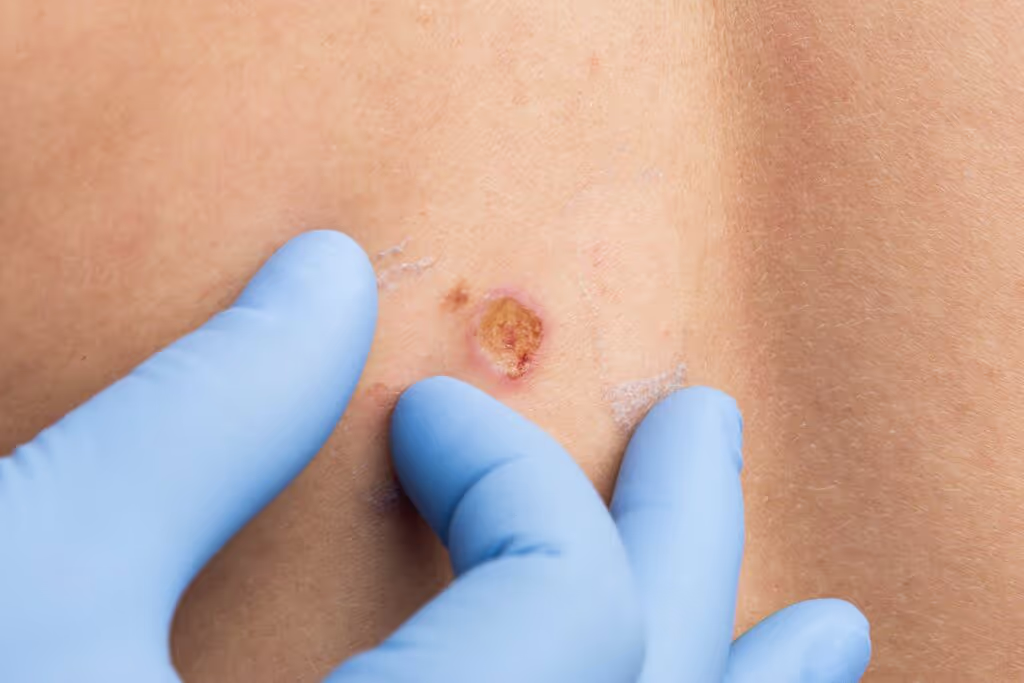
Electrodessication and Curettage (E&C) is a destructive procedure, not an excision. This distinction is critical. You do not bill an excision code (116xx) for an E&C. Instead, you use the CPT Malignant Destruction codes (17260-17286), which are based on anatomical location and size.
Malignant Destruction Code Families
Trunk, Arms, or Legs (CPT 17260-17266):
- Codes are broken down by lesion diameter (e.g., 17260 for 0.5 cm or less, 17261 for 0.6 to 1.0 cm, etc.).
Scalp, Neck, Hands, Feet (CPT 17270-17276):
- A different code set for these "intermediate" anatomical areas, also based on size.
Face, Ears, Eyelids, Lips (CPT 17280-17286):
- The highest reimbursement codes for these "complex" areas, also based on lesion diameter.
What Your Note Must Include
- Lesion Diameter: You must document the pre-treatment lesion diameter. This determines your code, not the final defect size.
- Location: The specific location (e.g., "right forearm," "left nasal ala") is required to select the correct code family.
- Diagnosis: The claim must be linked to a malignant diagnosis code (e.g., C44.311 for BCC of nose).
- Bundling: These codes include local anesthesia. Do not bill for a lidocaine injection. A biopsy on the same day is not separately billable unless it's on a different lesion (use Modifier 59).
E&C is NOT an Excision
"Remember: E&C is a destruction procedure. The lesion is not sent for margin analysis. Billing an excision code (116xx) is fraudulent. You must use the destruction codes (172xx) based on location and pre-treatment diameter."















_0.659722055465341110000.png?generation=1767673122094668&alt=media)