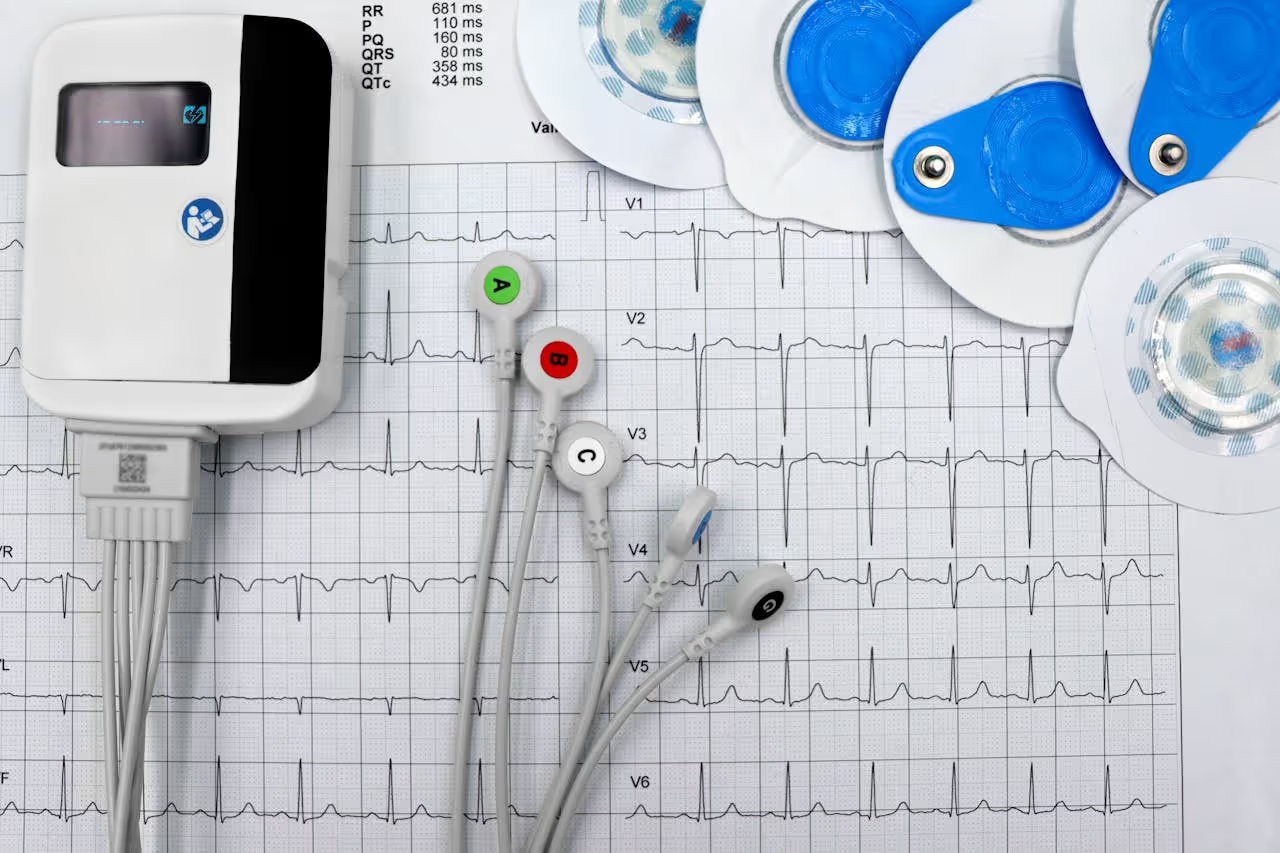


For Durable Medical Equipment (DME) suppliers, providing equipment is only half the battle; ensuring patients can use it safely and effectively is paramount. Yet, the time and expertise invested in patient education are frequently uncompensated, creating a significant revenue gap. This isn't just a customer service function—it's a critical component of care delivery that payers will reimburse when billed with precision. Overlooking the nuances of coding for patient training on devices like CPAP machines, nebulizers, or glucose monitors means leaving earned revenue on the table and risking non-compliance.
The Challenge: Billing for an Intangible Service
Unlike a tangible piece of equipment with a straightforward HCPCS code, patient education is a service. Payers, particularly Medicare, often consider initial training to be bundled into the reimbursement for the equipment itself. Claims are denied not because the service wasn't provided, but because it wasn't documented and coded to prove it was a "reasonable and necessary" component of the treatment plan. Without a Certificate of Medical Necessity (CMN) or detailed written order justifying the need for the equipment, any associated service claim will fail.
The key is to shift the mindset from billing for "time spent" to billing for a "completed, medically necessary therapy initiation." Your documentation must create an undeniable link between the physician's order, the patient's diagnosis, the equipment provided, and the training required for its effective use. This narrative justifies the entire claim, including the embedded educational component.
Coding Framework: HCPCS, ICD-10, and Modifiers
There is no universal CPT code for "DME patient education." Instead, reimbursement is achieved through the correct application of codes and modifiers related to the equipment provided. The primary HCPCS code for the DME item (e.g., E0601 for a CPAP device) is the foundation of the claim. This code's reimbursement fee schedule often assumes that basic setup and instruction are included.
Success hinges on demonstrating medical necessity through precise ICD-10 coding and leveraging modifiers to describe specific circumstances. For instance, billing for respiratory equipment requires a corresponding diagnosis code that meets the payer's Local Coverage Determination (LCD) criteria. Furthermore, with the rise of telehealth, modifiers have become critical for indicating how the education was delivered, directly impacting claim processing and payment, especially under evolving 2025-2026 regulations.
Real-World Application: Coding a CPAP Setup
Consider a patient prescribed a CPAP machine for obstructive sleep apnea. A clean claim requires perfect synergy between documentation and coding:
- Physician's Order: Must detail the diagnosis and specify the CPAP equipment and settings.
- Diagnosis Code (ICD-10): G47.33 (Obstructive sleep apnea). This code must be primary and align with the CMN.
- Procedure Code (HCPCS): E0601 (Continuous positive airway pressure (CPAP) device).
- Modifier: NU (New equipment) for a purchase or RR (Rental) for the initial rental month. If the education and setup were performed via a compliant telehealth platform, you must also append modifier 95 (Synchronous Telemedicine Service) or GT (Via interactive audio and video telecommunication systems), depending on payer preference.
Crucially, your internal documentation must log the date, duration, and content of the training session, including mask fitting, machine operation, cleaning protocols, and patient confirmation of understanding. This detailed record is your primary evidence in the event of an audit and substantiates that the service bundled within the E0601 reimbursement was properly rendered.
Mastering DME Education Billing
Capturing revenue for DME patient education is not about finding a secret code but about mastering the fundamentals of compliance and documentation. Reimbursement is intrinsically linked to the primary equipment's HCPCS code and justified by a clear diagnostic trail via the ICD-10 code. By treating patient training as a non-negotiable, fully documented part of the delivery process and using modifiers to accurately reflect service delivery (especially for telehealth), you can close revenue gaps, ensure compliance, and solidify your financial stability.
Education Billing Essentials
- Bundled Service: Patient education is typically bundled into the primary HCPCS code for the equipment.
- Prove Necessity: Use a specific ICD-10 code that aligns with payer LCDs to establish medical necessity.
- Document Everything: Meticulously log the training session details (date, duration, topics, patient sign-off) to survive an audit.
- Use Modifiers: Append modifiers like 95 or GT for telehealth services and NU or RR for equipment status.
Why Choose Us
Navigating DME billing complexities is our specialty. Bonfire Revenue's experts ensure your claims are clean, your documentation is audit-proof, and your revenue cycle is optimized. We stay ahead of shifting 2025-2026 regulations and payer policies so you can focus on patient care, not claim denials.