

Why Medical Billing for Dentists Matters
In the world of insurance reimbursement, dental practices often overlook an untapped opportunity: billing certain dental procedures under medical codes when justified by diagnosis and documentation. This not only opens new revenue streams but also expands patient accessibility and affordability — especially when dental insurance is limited or absent.
| Benefits | Medical Billing | Dental Billing |
|---|---|---|
| Unlimited Visits | ||
| Unlimited Coverage | ||
| Maximum Payouts | ||
| Bill for All Procedures You Do | ||
| Minimized Financing |
Crosswalk Between Common CDT and CPT Codes
Medical-dental cross-coding is essential in situations where dental procedures have medical necessity— such as trauma, pathology, systemic disease involvement, or surgical interventions. Medical insurers may reimburse these if correctly submitted using CPT codes supported by appropriate documentation.
| Medical CPT Code | CDT Code(s) | CDT Description |
|---|---|---|
| 76100 | D0321 | Other temporomandibular joint radiographic images, by report |
| 21110 | D7998 | Intraoral placement of a fixation device not in conjunction with a fracture |
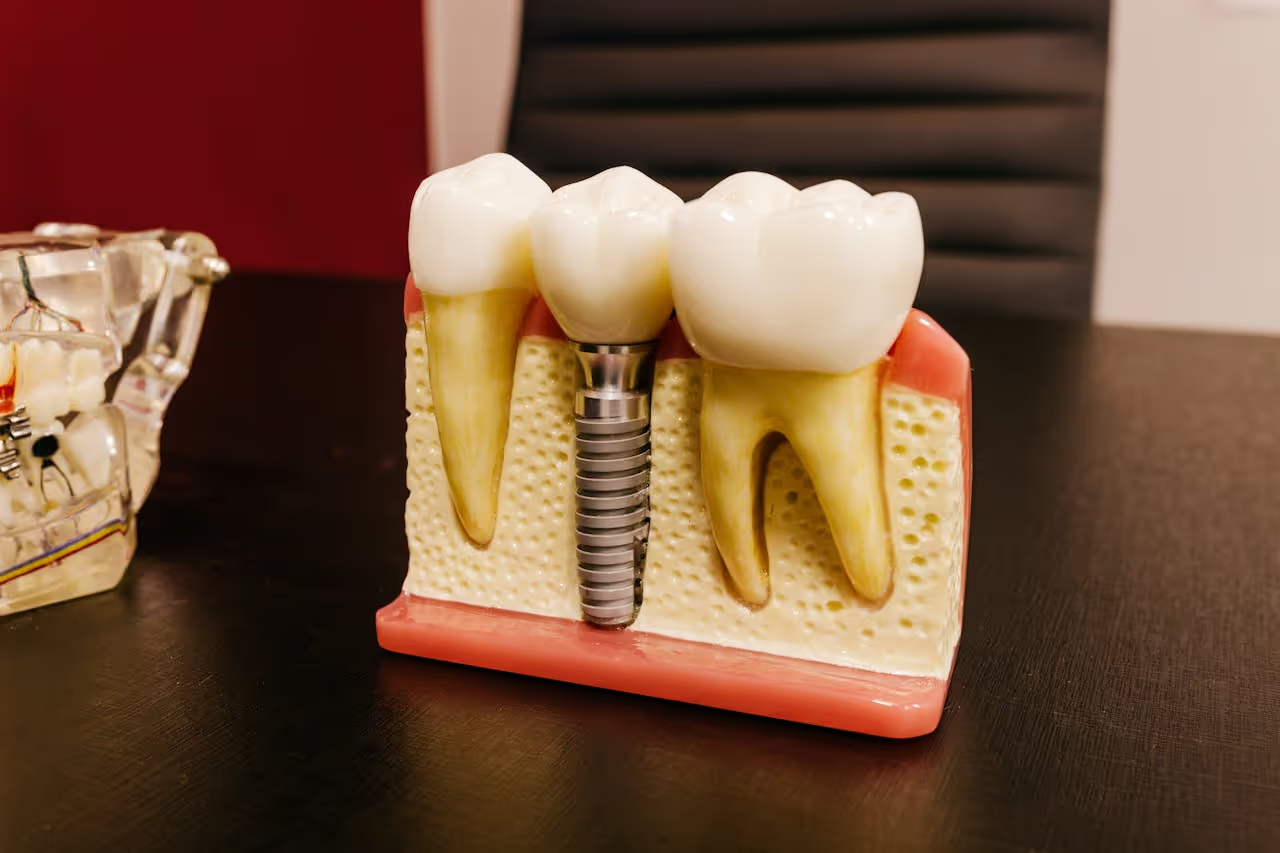
| 21248 | D6010 | Surgical placement of implant body: endosteal implant |
| 41899 | D7250 | Removal of residual roots (cutting procedure) |
| 21215 | D3428 | Bone graft in conjunction with periradicular surgery - per tooth, single site |
| 99202 | D0120 D0140 D0150 D0180 | Evaluation codes (periodic, comprehensive, etc.) |
Best Practices When Billing Medical for Dental Work
- Use ICD-10 codes (e.g.,
K01.1for impacted tooth). - Include detailed narratives and clinical records to prove medical necessity.
- Confirm pre-authorization requirements with the medical insurance payer.
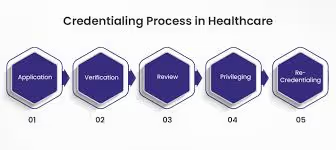
- Ensure the provider's NPI and credentialing are correctly set up for medical billing.
How to apply this: Always ensure your documentation is robust, using correct ICD-10 codes, narratives, and pre-authorizations to support medical necessity for every claim.