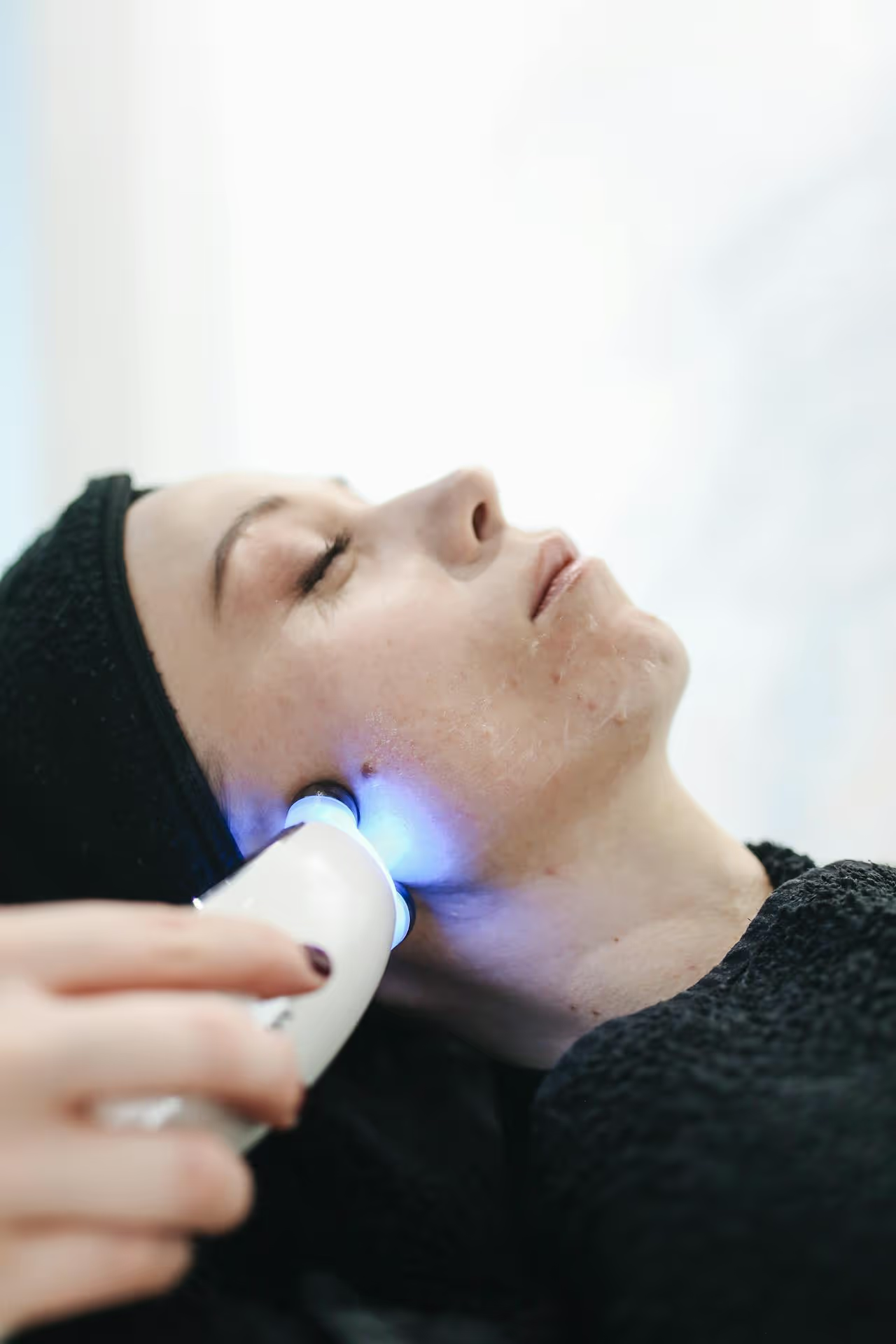


Cryosurgery is a cornerstone of dermatologic practice, valued for its efficacy in treating a range of benign, premalignant, and malignant lesions. While clinically straightforward, the billing and coding for this high-volume procedure present significant challenges that often lead to claim denials and revenue leakage. Incorrect lesion counting, improper modifier application, and failure to establish medical necessity through precise diagnosis coding are common pitfalls. This guide provides a strategic framework for navigating these nuances, ensuring your practice captures every dollar earned through accurate and compliant cryosurgery billing.
Decoding Cryosurgery CPT Codes: 17000-17004
The foundation of accurate cryosurgery billing lies in the correct application of the CPT code series for the destruction of premalignant lesions, such as actinic keratoses. Unlike other surgical codes, reimbursement is determined by the number of lesions treated, not their size or location. Miscounting is a direct path to a denial or audit.
The primary codes your team must master are:
- CPT 17000: Destruction (e.g., laser surgery, electrosurgery, cryosurgery, chemosurgery, surgical curettement), premalignant lesions (e.g., actinic keratoses); first lesion.
- CPT 17003: An add-on code used for the second through 14th lesions, reported in units for each additional lesion treated.
- CPT 17004: A standalone code used for the destruction of 15 or more premalignant lesions. Do not report 17000 or 17003 in conjunction with 17004.
It is also critical to differentiate these from codes for benign lesions (CPT 17110-17111) or malignant lesions (CPT 17260-17286), which have entirely different parameters and reimbursement rates.
The Critical Role of Modifiers and Documentation
Modifiers are not optional additions; they are essential data points that tell payers the full story of a patient encounter. For cryosurgery, two modifiers are paramount. Modifier 25 should be appended to an Evaluation and Management (E/M) service code when a significant, separately identifiable E/M service is performed by the same physician on the same day as the cryosurgery. For example, if a patient presents for a full-body skin check for skin cancer surveillance (a distinct E/M service) and the provider identifies and treats new actinic keratoses during that visit, Modifier 25 on the E/M code is appropriate.
Modifier 59 (or more specific X{EPSU} modifiers) is used to identify a distinct procedural service. This is necessary when another procedure, subject to National Correct Coding Initiative (NCCI) edits, is performed in the same session. For instance, if you perform cryosurgery on a facial actinic keratosis (17000) and also perform a shave removal of a seborrheic keratosis on the back (11305), Modifier 59 on the second procedure may be required to bypass the bundling edit. Meticulous documentation justifying the use of these modifiers—detailing separate diagnoses, anatomical locations, and the medical necessity of each service—is non-negotiable for claim approval.
Ensuring Medical Necessity with ICD-10 and Payer Policies
A correctly selected CPT code is worthless if not supported by a medically necessary ICD-10 diagnosis. Each cryosurgery procedure must be linked directly to the specific diagnosis for the lesion treated. For premalignant lesions, the most common diagnosis is ICD-10 L57.0 (Actinic keratosis). Using vague or unspecified codes is a red flag for payers and a common cause for denial. The documentation must clearly state the diagnosis for each lesion destroyed.
Furthermore, dermatology practices must be aware of payer-specific Local Coverage Determinations (LCDs) and commercial plan policies. These documents outline the specific diagnoses that support medical necessity for lesion destruction and often dictate limitations on the number of lesions that can be treated in a single session for full reimbursement. For example, some Medicare Administrative Contractors (MACs) may flag claims for the treatment of more than 14 lesions (CPT 17004) for manual review. Proactively understanding and adhering to these policies is key to preventing backend claim rejections and ensuring consistent cash flow.
Optimizing Reimbursement for Cryosurgery
Success in cryosurgery reimbursement hinges on precision. By focusing on accurate lesion counting for the CPT 17000 series, strategic application of Modifiers 25 and 59, precise ICD-10 code linking to establish medical necessity, and diligent adherence to payer-specific policies, your practice can significantly reduce denials. This transforms a routine clinical procedure into a reliable and properly compensated component of your revenue cycle. Mastering these billing intricacies is not just about compliance; it's about securing the financial health of your dermatology practice.
Cryosurgery Coding Essentials
- Use CPT 17000 for the first premalignant lesion and CPT 17003 for lesions 2-14.
- Use CPT 17004 for 15 or more lesions and report it alone.
- Append Modifier 25 to an E/M service only if it is significant and separately identifiable.
- Link each procedure to a specific ICD-10 code (e.g., L57.0 for Actinic Keratosis).
- Document the number, location, and diagnosis of all treated lesions to support medical necessity.
Why Choose Us
Your practice excels at clinical care; we excel at ensuring you're paid for it. Bonfire Revenue's experts specialize in dermatology RCM, navigating complex payer policies and coding updates for procedures like cryosurgery. We reduce your denial rate, optimize your revenue cycle, and prepare you for the 2025-2026 regulatory landscape, so you can focus on your patients.


_0.659722055465341110000.png?generation=1767673122094668&alt=media)