

Chiropractic providers frequently encounter denials for CPT code 97112 (Neuromuscular Reeducation), a valuable service that often falls under intense payer scrutiny. While essential for treating conditions affecting proprioception, balance, and posture, billing for this service requires a level of specificity far beyond that of a standard chiropractic manipulative treatment (CMT). Missteps in documentation, modifier application, or demonstrating medical necessity can lead to costly write-offs. This article provides a strategic framework for accurately coding, documenting, and securing reimbursement for neuromuscular reeducation, transforming a common point of frustration into a reliable revenue source.
Defining CPT 97112: Beyond Basic Adjustments
CPT 97112 is defined as "neuromuscular re-education of movement, balance, coordination, kinesthetic sense, posture, and/or proprioception for sitting and/or standing activities." It is a time-based code, billed in 15-minute increments of direct, one-on-one patient contact. The core of this service is not muscle strengthening (CPT 97110) or passive stretching (CPT 97140), but rather the re-establishment of neural pathways and mind-body connection to correct faulty movement patterns.
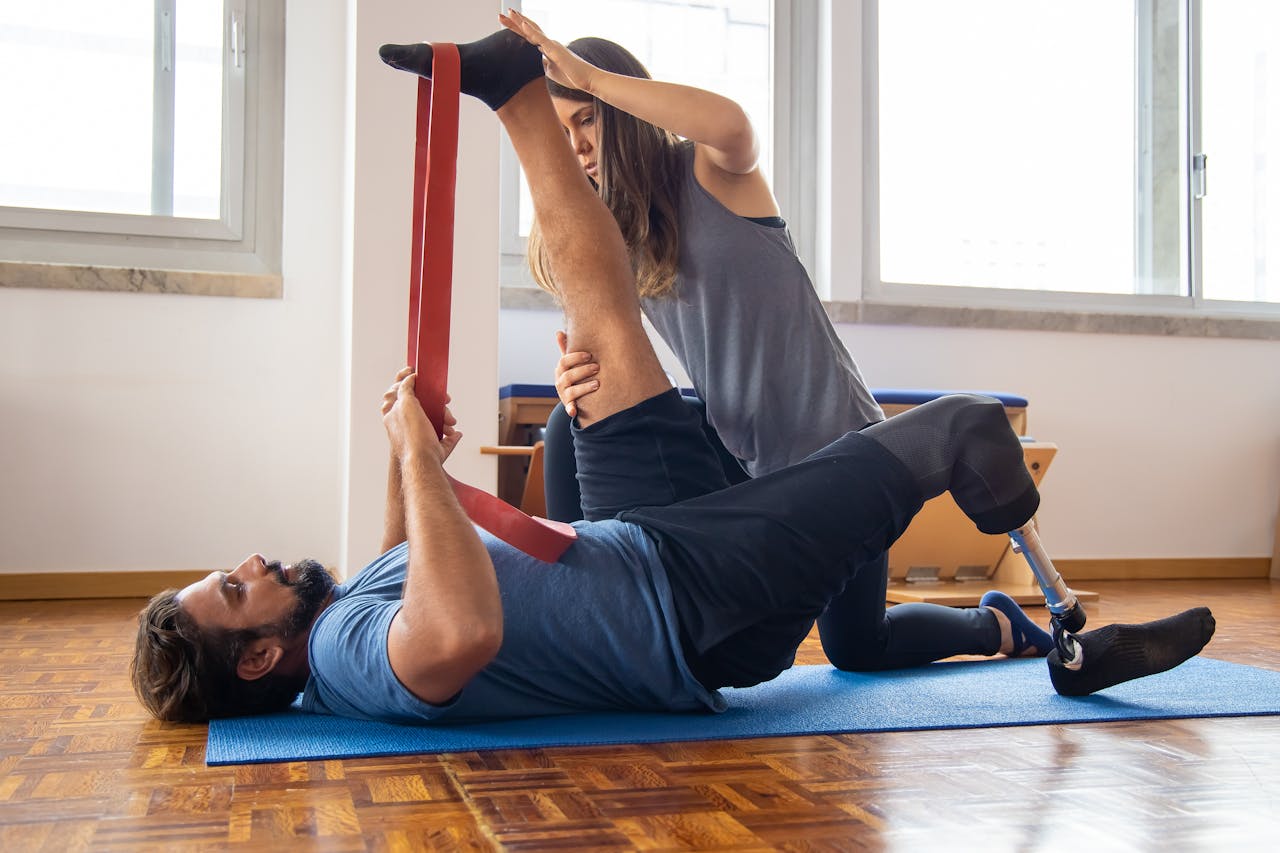
Activities under 97112 can include proprioceptive training on balance boards, stability exercises, mirror-imaging for postural correction, and gait training. Medical necessity is paramount and must be established by documenting objective functional deficits. Payers need to see a clear clinical rationale for why the patient requires this specific intervention to regain function, supported by diagnostic evidence beyond a simple subluxation code.
Coding Accuracy: ICD-10 and Modifier Application
The success of a 97112 claim often hinges on the correct pairing of CPT, ICD-10, and modifiers. The chosen diagnosis code must directly support the need for neuromuscular reeducation. While M99.- (Biomechanical lesion) codes justify a CMT, they are often insufficient on their own for 97112. Instead, link to diagnoses that explicitly describe a functional deficit, such as:
- R26.0 (Ataxic gait)
- R26.89 (Other abnormalities of gait and mobility)
- M62.3 (Immobility syndrome)
- M40.- series for kyphosis and lordosis
When billing 97112 alongside a CMT (98940-98942) on the same day, Modifier 59 (Distinct Procedural Service) is often required. This signifies that the neuromuscular reeducation was a separate and significant service from the adjustment, performed on a different body region or as a distinct intervention. Furthermore, for Medicare and some commercial payers, the AT Modifier (Acute Treatment) must be appended to indicate that services are part of an active treatment plan and not considered maintenance care.
Documentation: Your Strongest Defense Against Denials
If audited, your documentation is the only evidence that justifies payment. Generic notes like "performed NMR for 15 minutes" will trigger an automatic denial. Your records must paint a clear picture of the service provided, the clinical reasoning, and the patient's progress. Effective documentation for CPT 97112 must include:
- Objective Findings: Document specific, measurable deficits from your initial examination (e.g., "Patient demonstrates a 4-inch rightward sway during Romberg's test," "Observed forward head posture of 25mm").
- Specific Activities: Detail the exact exercises performed (e.g., "Single-leg stance on foam pad for 3 sets of 30 seconds," "Seated postural correction exercises using tactile cues").
- Time Documentation: As a time-based code, you must record the exact amount of direct, one-on-one time spent performing the service.
- Functional Goals & Progress: The treatment plan must have clear, functional goals (e.g., "Patient will be able to stand on one leg for 15 seconds without support to improve balance while dressing"). Subsequent notes must show progress toward these goals.
Securing Reimbursement for Neuromuscular Reeducation
Successfully billing for CPT 97112 is not about finding loopholes; it is about demonstrating clinical excellence through precise documentation and coding. By clearly defining the medical necessity, linking to specific functional diagnoses, applying modifiers correctly, and maintaining meticulous records, chiropractic practices can confidently utilize neuromuscular reeducation. This approach not only enhances patient outcomes by addressing complex functional deficits but also protects and optimizes your practice's revenue cycle against aggressive payer audits.
CPT 97112 At-a-Glance
CPT 97112: For re-education of movement, balance, coordination, posture, and proprioception.
Medical Necessity: Link to specific ICD-10 codes reflecting functional deficits (e.g., R26.0, R26.89), not just subluxation.
Modifiers are Key: Use Modifier 59 for distinct services alongside a CMT and the AT modifier for active care, per payer policy.
Document Everything: Timed activities, objective goals, and patient progress are non-negotiable for reimbursement.
Why Choose Us
Navigating payer-specific rules for codes like 97112 is a full-time job. Bonfire Revenue's experts specialize in the complexities of chiropractic billing, coding, and credentialing, ensuring you are paid accurately and promptly for the expert care you provide. Stop leaving money on the table due to avoidable denials.