

Orthopedic Evaluation & Management
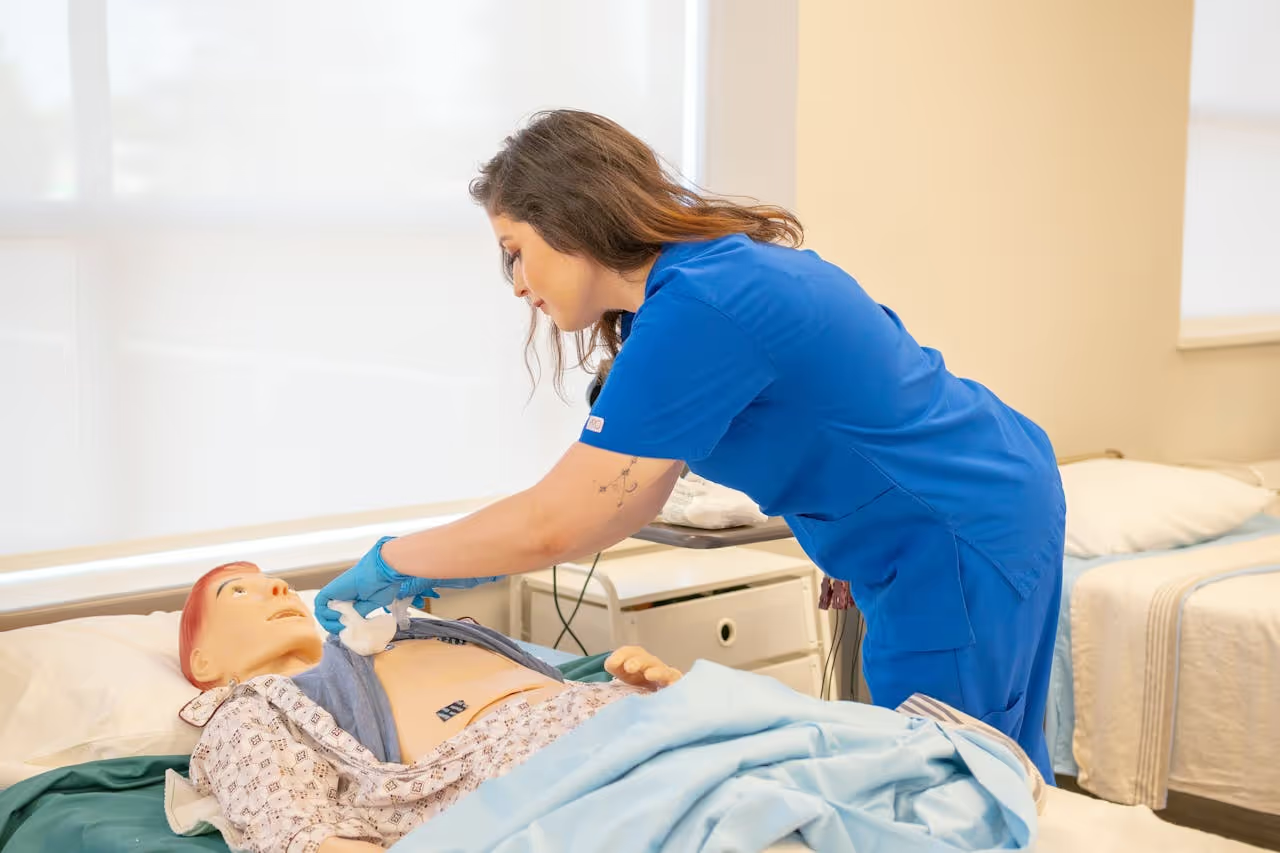
When a patient presents with a musculoskeletal complaint, the visit is billed using standard E/M codes. The key to supporting higher-level codes is thorough documentation of the physical exam. Your notes should detail specific findings related to range of motion, strength, tenderness, and stability for the affected joints to clearly justify the complexity of your medical decision-making.
Fracture and Injury Care
Billing for fracture care often involves a "global period" (typically 90 days), where one code covers the initial treatment and routine follow-up care. It is critical to know what is included in this global package to avoid billing for services that will be denied as inclusive. Separately, you can bill for casting and splinting supplies using specific Q-codes (e.g., Q4038 for a short arm cast).
Non-Injection Pain Management
Pain management in family medicine extends beyond injections. Time spent counseling patients on physical therapy, demonstrating exercises, or applying a TENS unit can be captured within an E/M code. The key is to document the time spent and the content of the counseling to support the level of service billed.
In-Office Radiology and Imaging
If your practice performs X-rays in-house, you can bill the "global" CPT code (e.g., 73610 for a complete foot X-ray), which covers both taking the image (technical component) and interpreting it (professional component). If you are only interpreting an X-ray taken at an outside facility, you would bill the same code but with modifier 26 to indicate you only performed the professional component.
Compliance Alert: Be aware of your state's laws regarding supervision and licensing for operating radiological equipment. Non-compliance can lead to major penalties.